Careem
Rebuilding Careem Plus
From stuck product to strategic asset
What was there when I started
Careem Plus had launched, spiked, and then plateaued at 8,000 subscribers. It had been sitting there for over a year and the number was starting to decline. The team running it had no foundational research, no proper customer data, and the decisions that had been made in that first year had largely been made on guesswork and competitor benchmarking. In addition the product was running at a commercial loss, with uncapped ride benefits eating margin more than the business could stomach, and behind the scenes large swathes of the business had quietly stopped backing it.
Despite all of that, Plus was genuinely a viable product. The strategic logic was sound: a subscription that bundled the value across rides, food, and groceries was the right shape for what Careem was trying to become. The problem wasn’t the product. It was the thinking around it.
Partnership, research, and the first hard decision
My first weeks were spent doing the work the team should have been doing for the previous year. I pushed for proper data tracking, made the case for a dedicated researcher, and started framing Plus as a strategic bet rather than a discount product. Some of that landed immediately, most of it landed slowly, and the work I could do alone had a ceiling. I needed a partner.
My prayers were soon answered and not long after I joined, a new commercial lead was brought into the team. We were on the same page from the start, and together we reshaped how Plus operated. A more senior product owner came in, a dedicated researcher joined the team, and Plus started being run the way it should have been from the beginning. The dynamic shifted from one designer pushing against the current to a partnership running with it.
The first piece of real work was the research the team had never done. Three studies in parallel: a brand perception study to test whether the value proposition was landing, a Gabor-Granger pricing study to find what customers were willing to pay, and an end-to-end usability study to find where Plus was losing people. The picture that came back was a product failing at every stage. Customers couldn’t tell what was on offer. The experience let them down once they were in. And the savings, when they happened, weren’t visible enough to feel real.
The first big decision came out of the pricing study. Plus was priced at AED 39 a month, sitting well above what most customers were willing to pay. Together with commercial leadership, we cut the price to AED 19 and introduced caps on the ride benefits to stop the heaviest users from gaming the system. Halving the price didn’t just lower the barrier to entry. It changed who Plus was designed for.
Building the engine
The work was organised around a service blueprint of every touchpoint where Plus met a customer. Every weekly planning conversation worked off it, every design decision mapped back to it, and every gap it surfaced became a candidate for the next sprint. We rotated between acquisition, engagement, retention and reactivation rather than treating them as separate workstreams, preventing us from spending all our effort on the workstreams that grabbed the headlines.
Each stream had its own unique flavour of disappointment. Acquisition: a list of benefits with no context. Engagement: hidden in the profile. Retention: full of broken experiences nobody could fix. Reactivation: not considered.
Retention came first for one simple reason, acquiring customers into a leaky bucket is wasted money, so before we touched the top of funnel we fixed the three biggest churn drivers the research and data had surfaced. Savings showed up in context, a dedicated Care experience was set up for all Plus subscribers to ensure a hands-on experience when things went wrong, and the technical issues that had been silently driving cancellations, including double charges and broken redemption flows, got fixed once and for all.
Cancellation was generating its own problems. Support tickets and social media kept flagging the same thing: leaving Plus was painful, and customers were happy to say so publicly. We rebuilt it on one principle: make the experience good enough that customers walked away willing to come back. That kept the door open. It also gave us a way to reach them once the issues that drove them away got fixed.
With the leaks in retention plugged, we turned our attentions to acquisition. The old flow asked for money upfront before customers understood what they were paying for, and threw every benefit at every customer regardless of what they were doing or how they actually used Careem. We flipped both. A free trial gave customers a taste of the savings to come before committing. The benefit structure was rewritten from the ground up. Instead of one pitch for everyone, we built personalised, contextual offers shaped by what each customer actually needed.
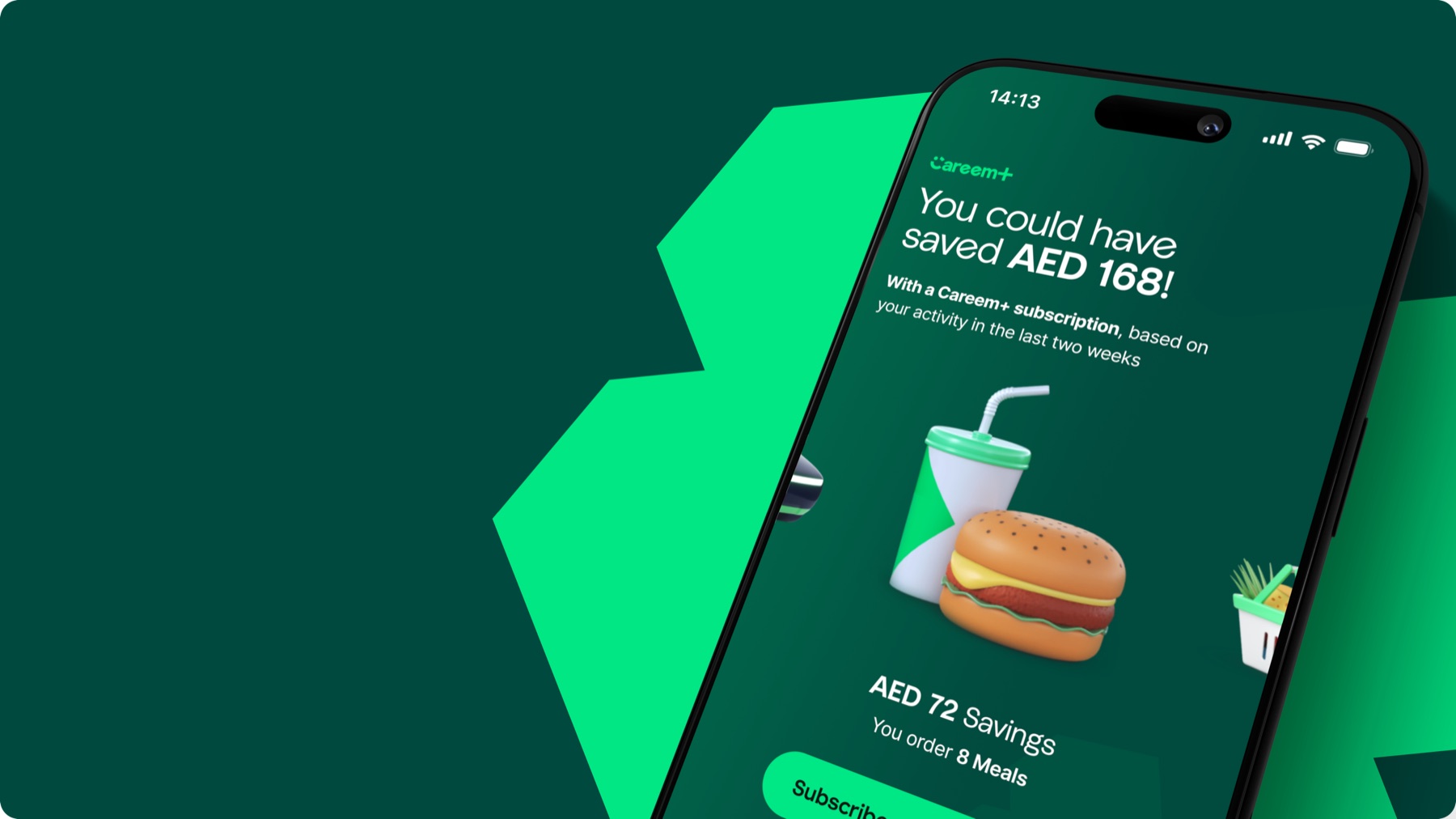
Engagement was the last piece of the puzzle, and it was about time Plus started showing up on its own. No more rooting around in profile menus to uncover how much had been saved. Plus met people where they were: here’s what you’ve saved, and here’s how to save more on things you already do.
The numbers moved. Plus grew from 8,000 subscribers to 100,000. Retention held at 90% past six months. Average customer savings reached AED 71 a month. The product was working.
What product success didn’t solve
Hitting 100,000 subscribers shifted Plus’s standing both internally and externally. The verticals that had spent months refusing to integrate started showing up to the meetings. Marketing started leading with Plus instead of working around it. Partners started chasing us instead of the other way round. The product had earned the credibility it needed.
What it hadn’t earned was alignment. Plus working didn’t mean the company was working with it. Each vertical was still operating against its own P&L, integration work was still being negotiated one team at a time, and the broader question of what Careem was actually trying to be, a collection of services or a single platform, was still unresolved.
I started working with the MD and the commercial lead on a top-down initiative to unite the org around a single mission, with Plus as the anchor. Design’s contribution was making the case visible. Vision playbacks, journey artefacts, and alignment sessions across the verticals to show what the unified state actually looked like for customers, and what each team’s role in it would be. The work was less about persuasion and more about making the conversation possible.
The process became the foundations of the methodology I’ve gone on to use throughout my career: align teams around their own objectives, surface customer and data insights to expose the gaps, run cross-vertical ideation, and synthesise the output into something coherent. What came out was a centralised set of components and patterns that solved the biggest customer pain points and worked across the platform’s inconsistencies. That work took Plus from 100,000 to over 300,000 subscribers.
The shift, and what it made possible
By the time I moved into the Head of Design role, Plus had become a different product to the one I’d inherited. 300K subscribers and climbing, retention holding at 90%, and partnerships that had been a slog to land in the early days started arriving on their own. HSBC alone added 50,000 subscribers in a single deal.
Every vertical had Plus benefits integrated. CSAT and CES on Plus were the highest in the company.
The bigger shift was strategic. Plus had become the catalyst the super app needed. Before the shift, the super app was not much more than a strategy slide and a dream. After the shift, the company had its first proof that the services could pull together under one banner that customers actually responded to.
The ways of working we’d built around Plus also started spreading. Cross-functional swarming, designing on a service blueprint, leading every conversation with research. The unified roadmap conversations that came later got their first real precedent here.
When e& eventually acquired Careem, Plus was named as one of the strategic assets that made the deal worth doing. What was once the black sheep of the family running at 8,000 subscribers had become the jewel in Careem’s glittery crown of experiences.